Rabu, 27 Januari 2021

explanation text

Explanation Text ; Definition, Generic Structures, Purposes, Language Features


Hello everyone.
— I’m sure my friends have been familiar with the word Explanation. Because in the world of education and even in daily life we usually meet explanation, maybe from our teacher, our parents, even our friends. These explanations are one example of Explanation Text. For example, do you ever explain something to your friends? When your friend asked, how is the process of rain, or how is the process of human creation?, etc. Then you explained to your friends about it. These explanations are one of example of Explanation Text.
Well, for my friends who want to learn about explanation text, my friends have come in the right place because in this occasion I will try to present explanations and examples of Explanation Text in detail and complete. I hope my explanation about Explanation Text below can be useful for all of the readers. Amen

Definition of Explanation Text

Explanation is a text which tells processes relating to forming of natural, social, scientific and cultural phenomena. Explanation text is to say ‘why’ and ‘how’ of the forming of the phenomena. It is often found in science, geography and history text books.

Generic Structure of Explanation Text

– General statement
General statement; stating the phenomenon issues which are to be explained.
– Sequenced of explanation
Sequenced explanation; stating a series of steps which explain the phenomena.

Purpose of Explanation Text

– Explanation is a text which tells processes relating to forming of natural, social, scientific, and cultural phenomena.
– To explain how or why something happens.
According to Mark Anderson and Kathy Anderson (1997: 82) says that the explanation text type is often used to tell how and why thing (phenomena) occur in nature.


Language Features of Explanation Text

In an explanation text, there are linguistic features as below :
– Using simple present tense
– Using abstract noun (no visible noun)
– Using Passive voice
– Using Action verbs
– Containing explanation of the process ..

Examples of Explanation Text

Example of Explanation Text about Natural Phenomenon

How does Rain Happen?

Rain is the primary source of fresh water for most areas of the world, providing suitable conditions for diverse ecosystems, as well as water for hydroelectric power plants and crop irrigation.
The phenomenon of rain is actually a water circle. The concept of the water cycle involves the sun heating the Earth’s surface water and causing the surface water to evaporate. The water vapor rises into the Earth’s atmosphere. The water in the atmosphere cools and condenses into liquid droplets. The droplets grow until they are heavy and fall to the earth as precipitation which can be in the form of rain or snow.
However, not all rain reaches the surface. Some evaporates while falling through dry air. This is called virga, a phenomenon which is often seen in hot, dry desert regions

thank you... 

Rabu, 20 Januari 2021

Cause and Effect

hi everyone 
To begin, you should know the definitions of cause, effect (noun), and affect (verb).

(When effect is a verb, it is spelled with an a = affect.)

Cause

(noun) a person or thing that makes something happen

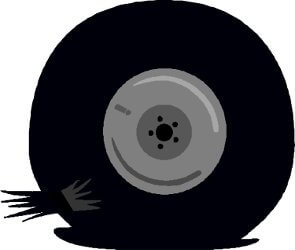
  • The cause of the accident was a flat tire.


    flat tire


(verb) an action that makes something happen


  • The flat tire caused the car to wreck.

    flat tire

Effect

(noun) a change that is a result of an action or cause

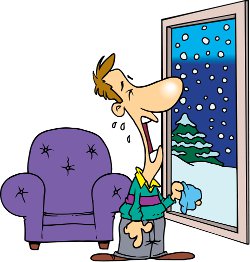
  • The snowstorm had an effect on his mood.


    snow


Affect

When effect is used as a verb, it is usually spelled with an a = affect.


(verb) to produce an effect; to cause a change in something.

  • The snowstorm affected his mood.

    snow


Talking about causes and effects in English

To express cause and effect in English, we us certain words and phrases.

  • due to

  • because of

  • owing to

  • thanks to

  • as a consequence of

  • as a result of

  • because

  • since

  • as

  • for

To express cause and effect, these words or phrases will either be followed by a
noun or a verb.


Followed by a noun

These cause/effect phrases are followed by a noun or noun phrase.
  • due to

  • because of

  • owing to

  • as a consequence of

  • as a result of

  • thanks to

In the following examples, the noun or noun phrase will be underlined.

The cause always comes after the cause/effect signal word or phrase.


Followed by a verb

These cause/effect signal words are followed by a subject + verb or verb phrase

  • because

  • since

  • as

  • for

Rabu, 18 November 2020

type 3


The type 3 conditional refers to an impossible condition in the past and its probable result in the past. These sentences are truly hypothetical and unreal, because it is now too late for the condition or its result to exist. There is always some implication of regret with type 3 conditional sentences. The reality is the opposite of, or contrary to, what the sentence expresses. In type 3 conditional sentences, the time is the past and the situation is hypothetical.

Examples

  • If I had worked harder I would have passed the exam. (But I didn't work hard, and I didn't pass the exam.)
  • If I had known you were coming I would have baked a cake. (But I didn't know and I didn't bake a cake.)
  • I would have been happy if you had called me on my birthday. (But you didn't call me and I am not happy.)

In type 3 conditional sentences, you can also use modals in the main clause instead of "would" to express the degree of certainty, permission, or a recommendation about the outcome.

Examples

  • If I had worked harder I might have passed the exam.
  • You could have been on time if you had caught the bus.
  • If he called you, you could go.
  • If you bought my school supplies for me, I might be able to go to the park.

Formulas for Conditional Sentence Type 3

The conditional clause (if + condition) uses the past perfect tense, while the main clause (result) uses the perfect modal (modal + have + past participle).

As in all conditional sentences, the order of the clauses is not fixed. You may have to rearrange the pronouns and adjust punctuation when you change the order of the clauses, but the meaning is identical.

Examples

  • If it had rained, you would have gotten wet.
  • You would have gotten wet if it had rained.
  • You would have passed your exam if you had worked harder.
  • If you had worked harder, you would have passed your exam.
  • I would have believed you if you hadn't lied to me before.
  • If you hadn't lied to me before, I would have believed you.

Contractions

Both would and had can be contracted to 'd, which can be confusing if you are not confident with type 3 conditional sentences. Remember 2 rules:
would never appears in the if-clause so if 'd appears in the if clause, it must be abbreviating had.
had never appears before have so if 'd appears on a pronoun just before have, it must be abbreviating would.

Examples

  • If I'd known you were in hospital, I'd have visited you.
  • If I had known you were in hospital, I would have visited you.
  • I'd have bought you a present if I'd known it was your birthday.
  • I would have bought you a present if I had known it was your birthday.
  • If you'd given me your e-mail, I'd have written to you.
  • If you had given me your e-mail, I would have written to you.

The perfect conditional tense

The perfect conditional of any verb is composed of three elements:
would + have + past participle
Have followed by the past participle is used in other constructions as well. it is called the "perfect infinitive

Dialogue about Type 3 If Conditional


azzah   : have you found your dog?

wahyu : yes, I have. I wouldn’t have found her if Yanto had not helped me.

azzah   : What a relief! I’m sorry I couldn’t help you at that time.

wahyu : It’s okay. By the way, how was holiday in bali?

azzah   : It was so exciting. If I my brother had not called me, I would have stayed longer.

wahyu  : Glad to hear that. I wish I had had money to go bali with you.

THANK YOU..... 

Rabu, 11 November 2020

Conditional type 2

HI GUYS Today i want to tell u guys about Type 2 Conditional Sentence.


Type 2 Conditional

In a type 2 conditional sentence, the tense in the "if" clause is the simple past, and the tense in the main clause is the present conditional or the present continuous conditional.

If clause (condition)          Main clause (result)

• If + simple past.               • Present conditional or        ⠀⠀⠀⠀⠀⠀⠀⠀⠀⠀⠀⠀⠀⠀⠀     present continuous ⠀⠀⠀⠀⠀⠀⠀⠀⠀⠀⠀⠀⠀⠀⠀       conditional.
• If this thing happened⠀⠀• That thing would happen.

As in all conditional sentences, the order of the clauses is not fixed. You may have to rearrange the pronouns and adjust punctuation when you change the order of the clauses, but the meaning is identical.

Examples

• If it rained, you would get wet.
• You would get wet if it rained.
• If you went to bed earlier you wouldn't be so tired.
• You wouldn't be so tired if you went to bed earlier.
• If she fell, she would hurt herself.
• She would hurt herself if she fell.

Function

The type 2 conditional refers to an unlikely or hypothetical condition and its probable result. These sentences are not based on the actual situation. In type 2 conditional sentences, the time is now or any time and the situation is hypothetical.

Examples
• If the weather wasn't so bad, we would go to the park. (But the weather is bad so we can't go.)
• If I was the Queen of England, I would give everyone a chicken. (But I am not the Queen.
• If you really loved me, you would buy me a diamond ring.
• If I knew where she lived, I would go and see her.

It is correct, and very common, to say "if I were" instead of "if I was" (subjunctive mood).

Examples

• If I were taller, I would buy this dress.
• If I were 20, I would travel the world.
• If I were you, I would give up smoking.
• If I were a plant, I would love the rain.

In type 2 conditional sentences, you can also use modals in the main clause instead of "would" to express the degree of certainty, permission, or a recommendation about the outcome.

Examples

• We might buy a larger house if we had more money.
• He could go to the concert if you gave him your ticket.
• If he called me, I couldn't hear.

The present conditional tense

The present conditional of any verb is composed of two elements:
would + the infinitive of the main verb, without "to"

To Go: present conditional

Rabu, 04 November 2020

Type One

Type One


Type 1 Conditional

In type 1 conditional sentences, the tense in the if clause is the simple present and the tense in the main clause is the simple future. If clause (condition) Main clause (result / effect) If + simple presentsimple future If this thing happensthat thing will happen. As in all conditional sentences, the order of the clauses is not fixed. You may have to adjust pronouns and punctuation marks when changing clause order, but the meaning is the same. 

Example:

• If it rains, you will get wet.
• You will get wet if it rains.
• If Sally is late again I will be mad.
• I will be mad if Sally is late again.
• If you don't hurry, you will miss the bus.
• You will miss the bus if you don't hurry.

The Function 

Type 1 conditional refers to conditions that may occur and the possible results. These sentences are based on facts and are used to make statements about the real world and certain situations. We often use sentences like this to provide warnings. In type 1 conditional sentences, the time is the present or the future and the situation is real. 

Example:

• If I have time, I'll finish that letter.
• What will you do if you miss the plane?
• Nobody will notice if you make a mistake.
• If you drop that glass, it will break.
• If you don't drop the gun, I'll shoot!
• If you don't leave, I'll call the police.

In type 1 conditional sentences, you can also use modal in the main clause and not the future tense to express the degree of certainty, permission, or recommendation regarding the outcome or outcome. 

Example:

• If you drop that glass, it might break.
• I may finish that letter if I have time.
• If he calls you, you should go.
• If you buy my school supplies for me, I will be able to go to the park.
Dialogue about first type if conditional

azzah : Well it’s an amazing sunday, isn’t it?

wahyu : Yeahh it’s true, and this weekend will be our last amazing weekend. 
azzah : Why? 
wahyu : Because next week we gonna have a final exam. Haa. I am afraid if I can’t pass the exam. 
azzah : No, you will. If we study wit all of our effort, we will definitely pass the exam. 
wahyu : Ok, I’ll do my best.
thank you... 

Rabu, 21 Oktober 2020

Conditional zero


Conditional If Zero Type

    We use the zero conditional when we want to talk about facts or things that are generally true. Scientific facts are often covered by the zero conditional: "When you heat ice, it melts." The zero conditional uses if or when and must be followed by the simple present or imperative.

FUNCTION CONDITIONAL SENTENCES

1. State the conditions that will occur if the conditions are met now or in the future.

2. Expressing a presumption at present or in the future but in reality the opposite so 

that the probability of occurrence is very small.

3. Conditionally state what has happened in the past. 

For type 3 conditional sentences, it is usually in the form of regret for events that occurred because the conditions were not met


If + simple present, simple present

 Simple present + if + simple present

 Example of sentences:
●If it rains, the grass gets wet.
●The grass gets wet if it rains.
●If you heat water to 100°, it boils.
●If you eat a lot, you put on weight.
●If I’m tired, I go to bed early.

Conditional Sentence Type 1

This type is also relatively easy to understand.  Type 1 conditional sentences are used to say something that may happen in the future.  That is, if you use this conditional sentence, it means that you are sure that the assumption is still possible in the future.  The formula used is as follows:

 If + simple present, present future (will)

 Present future + if + simple present